Singapore’s B2B landscape is one of the most competitive in Southeast Asia. With decision-makers fielding dozens of outreach attempts every week, the companies that consistently win are not necessarily those with the biggest budgets; they are the ones making the smartest use of their data. As a result, data-driven lead generation has become less of a competitive advantage and more of a baseline requirement for B2B teams that want to grow their pipeline sustainably.
Are you attracting prospects who never reply? Are your sales teams chasing contacts that don’t match your ideal customer profile (ICP)? Or worse, are you investing heavily in campaigns without clearly knowing your true cost per lead (CPL) or conversion rates?
If any of these sound familiar, you are not alone. Many growing tech, finance, and enterprise-focused companies in Singapore struggle with inconsistent data, low-quality inquiries, and disconnected sales and marketing efforts. As a result, pipelines look full, but revenue tells a different story. That is exactly why data-driven lead generation is no longer optional.
So, what does it actually mean to run a data-driven lead generation programme? And more importantly, how can Singapore businesses implement it effectively?
Still chasing low-fit leads?
Why Does Data-Driven Lead Generation Matter for Singapore B2B?
Before diving into tactics, it is worth understanding why data-driven marketing has become so central to B2B growth in Singapore specifically. The city-state is home to a dense concentration of regional headquarters, financial institutions, SaaS companies, and tech enterprises, all competing for the attention of a relatively small but high-value pool of decision-makers.

In that kind of environment, broad outreach strategies tend to fall flat. Generic campaigns burn through the budget without producing a meaningful pipeline. Furthermore, Singapore’s Personal Data Protection Act (PDPA) means that data compliance is not optional; businesses must handle prospect data responsibly or face real regulatory consequences.
Data-driven lead generation, therefore, offers a clear path forward. By building campaigns around clean, enriched, and compliant data, B2B teams can:
- Reach the right prospects with greater precision
- Reduce wasted spend on low-fit leads
- Improve conversion rates across channels
- Maintain full compliance with Singapore’s data privacy standards
What Is Data-Driven Lead Generation, Really?
At its core, data-driven lead generation is a strategic approach that uses accurate data, analytics, and measurable KPIs to attract and convert high-quality prospects. However, it is more than simply tracking website visits in Google Analytics.
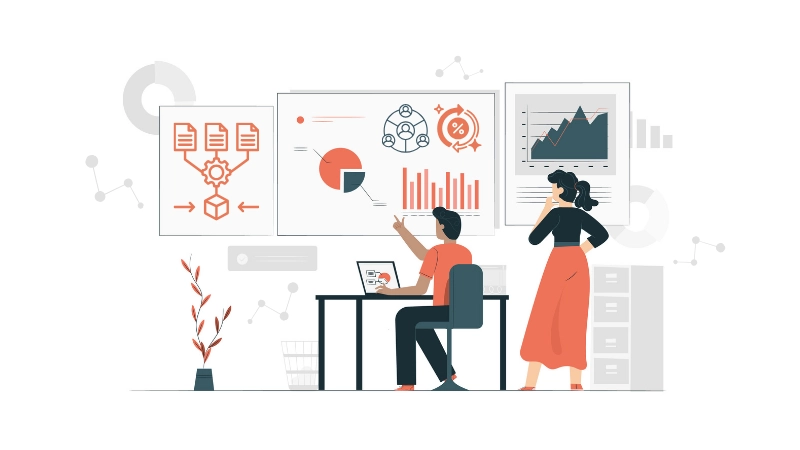
It combines:
- Data management and clean data infrastructure
- Predictive analytics and predictive models
- Behavioural analytics and engagement data
- Lead scoring and lead prioritisation
- Segmentation and audience profiling
- Conversion rate optimisation (CRO)
In other words, instead of guessing who might be interested, you use intent data, purchase intent signals, firmographics, and technographics to identify companies that are already showing buying behaviour.
For Singapore B2B organisations targeting enterprise leads, this precision is critical. Sales cycles are longer, buying committees are larger, and competition is stronger. Therefore, a structured, data-driven marketing strategy ensures that every touchpoint moves prospects closer to becoming an MQL (Marketing Qualified Lead), and ultimately an SQL (Sales Qualified Lead).
See how a Singapore-based IT solutions provider generated 42 SQLs and successfully expanded its market reach in Singapore.
What is the Foundation of a Data-Driven Lead Generation Strategy?
So how do you build the right data infrastructure?
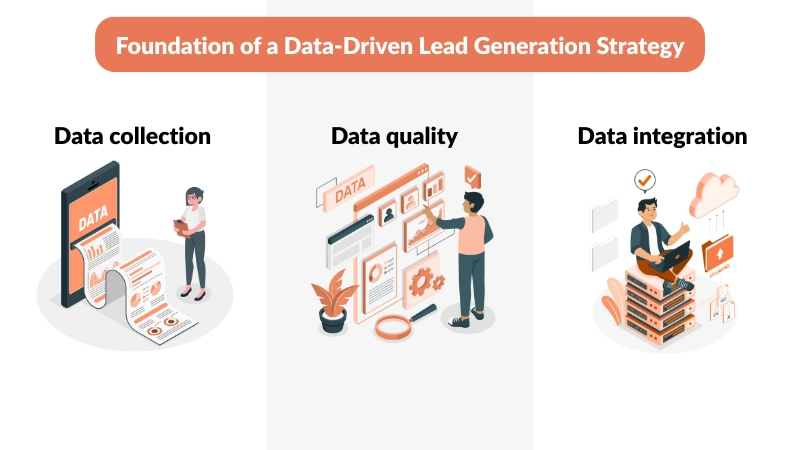
Every effective data-driven lead generation programme starts with a strong data infrastructure. Without it, even the most sophisticated tools and automation will produce unreliable results. Specifically, the foundation consists of three interconnected pillars:
1. Data collection
This involves gathering accurate firmographic, technographic, and behavioural signals from multiple sources.
- Website forms, landing pages, and chat interactions
- CRM systems like Salesforce, HubSpot, Zoho CRM, or Pipedrive
- Data enrichment platforms such as ZoomInfo, Apollo.io, Clearbit, Cognism, Kaspr, or Seamless.AI
- LinkedIn Sales Navigator engagement
Moreover, tracking engagement data through Google Analytics, Looker, Tableau, or Power BI provides visibility into prospect behaviour. The goal is not to collect more data, but to collect relevant, actionable data. However, collecting data is only the first step.
2. Data quality
Why is data cleansing and data quality critical?
This is where many teams fall short. If your CRM is filled with outdated contacts, duplicate records, or incomplete firmographic details, your campaigns will suffer. Data cleansing and database management ensure:
- Higher email deliverability
- Lower cost per lead (CPL)
- Improved segmentation accuracy
- Better personalisation at every touchpoint
Consequently, clean data leads to higher-quality leads and improved conversion rates across the board.
3. Data integration
What is data enrichment, and why does it matter?
This ties everything together. When your CRM systems (whether Salesforce, HubSpot, Zoho CRM, or Pipedrive), your marketing automation platform, and your analytics tools are all connected, your team gains a unified view of every prospect. That unified view, in turn, enables smarter decisions at every stage of the pipeline.
Outdated CRM records are costing you deals.
See how enriched and validated data improves deliverability and lead quality.
How Does Lead Scoring Improve Lead Quality and Prioritisation?
One of the most practical applications of data-driven marketing is lead scoring, a system that assigns numerical values to prospects based on how closely they match your Ideal Customer Profile (ICP) and how actively they are engaging with your content and outreach.

Typically, lead scoring combines two dimensions:
- The first is the demographic and firmographic score, which reflects how well a prospect fits your target profile in terms of industry, company size, location, seniority, and other structural factors.
- The second is the behavioural score, which tracks engagement data such as email opens, content downloads, webinar attendance, and website visits.
Together, these scores allow your team to distinguish between Marketing Qualified Leads (MQLs) and Sales Qualified Leads (SQLs) with greater precision. Instead of passing every new contact to sales, you prioritise only those prospects who have demonstrated both fit and intent. The result is a leaner, more focused pipeline, and a sales team that spends its time on conversations most likely to convert.
Moreover, by layering in intent signals and purchase intent data from platforms like ZoomInfo, you can identify prospects who are actively researching solutions in your category, even before they have engaged with your brand directly. That kind of lead prioritisation gives Singapore B2B teams a meaningful head start.
Can Predictive Analytics and Behavioural Data Improve Campaign Performance?
The answer is yes. In fact, this is where data-driven lead generation starts to move well beyond basic list-building. Predictive analytics uses historical conversion data, behavioural patterns, and machine learning to forecast which prospects are most likely to become customers. Rather than relying on intuition, your team can build and refine predictive models that surface high-value accounts before they even enter your pipeline.
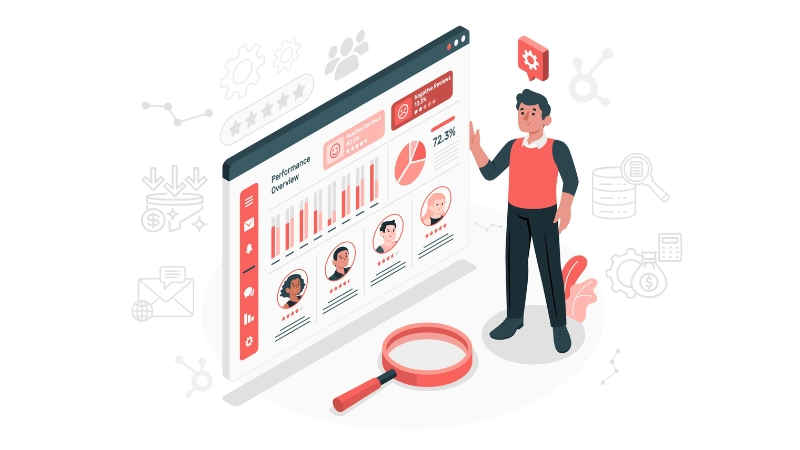
In practice, this means using performance analytics tools like Tableau, Power BI, or Google Looker Studio to monitor KPIs such as:
- Cost per lead (CPL)
- Conversion rates by channel and segment
- Engagement rates across email, phone, and LinkedIn
- Pipeline velocity and SQL-to-close ratios
When you combine those insights with A/B testing — testing subject lines, call-to-action copy, content formats, or outreach timing — you create a continuous optimisation loop that improves results over time. Additionally, lookalike modelling enables you to identify new prospects who share the same characteristics as your best existing customers, making your audience profiling and segmentation significantly more effective.
How Does Hyper-Personalisation Drive Better Engagement in Lead Nurturing?
Personalisation in B2B used to mean addressing an email with a prospect’s first name. Today, hyper-personalisation means tailoring every touchpoint — the message, the channel, the timing, and the content — based on a prospect’s specific behaviour, interests, and stage in the buying journey.
This level of personalisation is only possible when your data infrastructure is working correctly. When your CRM is enriched, your segmentation is accurate, and your marketing automation tools (such as Marketo, Pardot, or Outreach.io) are properly configured, you can deliver personalised campaigns that respond dynamically to how prospects behave. For example:
- A prospect who downloads a whitepaper on cloud security should consequently receive a follow-up sequence focused on that topic, not a generic product brochure
- A contact who visits your pricing page twice in one week is signalling strong purchase intent and should be escalated for direct sales outreach
- An MQL who has gone quiet after initial engagement can be re-entered into a nurture track with fresh, relevant content designed to rebuild interest
The broader point is that hyper-personalisation is not just a nicety; it is a direct driver of conversion rate optimisation. When prospects feel understood rather than marketed to, they are significantly more likely to engage.
What Role Does Data Compliance Play in Singapore’s Lead Generation Landscape?
Data compliance is an area that Singapore B2B teams cannot afford to overlook. Beyond the PDPA, companies operating across borders must also navigate GDPR requirements for European contacts, along with other regional regulations as they expand into new markets.
Practically speaking, strong data compliance means ensuring that your programme covers the following:
- Data collection and storage — meeting required legal standards for how prospect information is gathered and retained
- Ethical data sourcing — working only with providers and methods that respect transparency and consent
- Opt-out and consent management — honouring prospect preferences promptly across all channels
- Security certifications — partnering with vendors that hold recognised standards such as ISO compliance and SOC2 compliance
Here is the list of data compliance that Singapore businesses operating globally must consider:
- PDPA — Singapore’s Personal Data Protection Act
- GDPR — for contacts and prospects in Europe
- CCPA and CPRA — for California-based contacts
- CAN-SPAM Act — for email outreach compliance
- SOC2 and ISO compliance — for enterprise-level security standards
Furthermore, data compliance is increasingly a trust signal in B2B sales. Prospects and clients alike want to know that their data is being handled responsibly. Demonstrating strong data governance practices can therefore become a competitive differentiator, particularly when pursuing enterprise leads in Singapore and across the region.
Explore marketing trends shaping enterprise success in Singapore.
How Can Singapore B2B Teams Get Started With Data-Driven Lead Generation?
Getting started does not necessarily mean rebuilding your entire tech stack overnight. Instead, the most effective approach is incremental, starting with the areas where better data will have the most immediate impact on your pipeline.
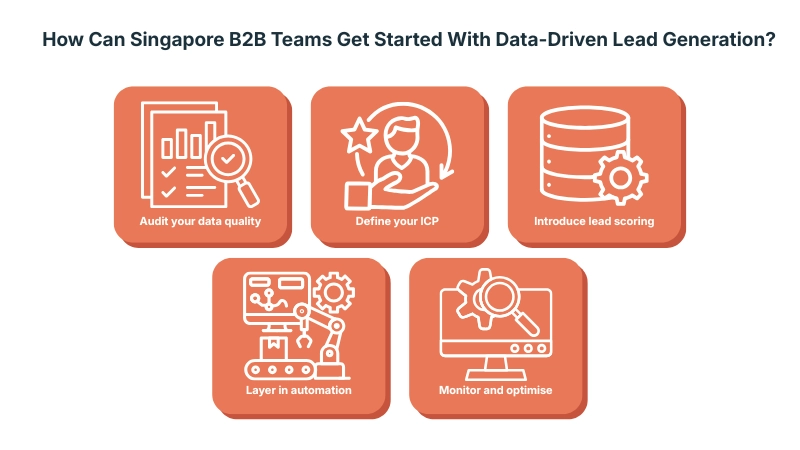
Here is a practical sequence to follow:
- Audit your data quality — identify gaps in your CRM, remove duplicate records, and enrich existing contacts with updated firmographic and technographic information
- Define your ICP — build or refine a clear, shared definition of your best-fit prospects so that your team is aligned from the start
- Introduce lead scoring — create a consistent system for distinguishing high-priority SQLs from early-stage MQLs
- Layer in automation — configure your outreach automation tools to trigger personalised sequences based on prospect behaviour and lead score thresholds
- Monitor and optimise — use your analytics stack to track KPIs regularly and adjust your strategy in response to real performance data
As your data infrastructure matures, you can layer in more sophisticated capabilities, predictive analytics, intent data monitoring, lookalike modelling, and full business intelligence (BI) reporting. Throughout the process, keeping your KPIs visible and reviewing performance regularly ensures your strategy evolves in response to real results rather than assumptions.
Traffic doesn’t close deals. Data-driven targeting does.
The Bottom Line: Data Is the Difference
Singapore’s B2B market rewards precision. Broad, undifferentiated outreach is increasingly expensive and increasingly ineffective. By contrast, teams that invest in clean data, thoughtful segmentation, accurate lead scoring, and personalised lead nurturing are building a pipeline engine that compounds over time.
The good news is that the tools and expertise to do this well are more accessible than ever. Whether you are managing this in-house or working with a specialist partner like Callbox, the path to better leads runs through better data — and that journey is worth starting today.
Ready to build a data-driven lead generation strategy for your Singapore market? Talk to a Callbox consultant today.